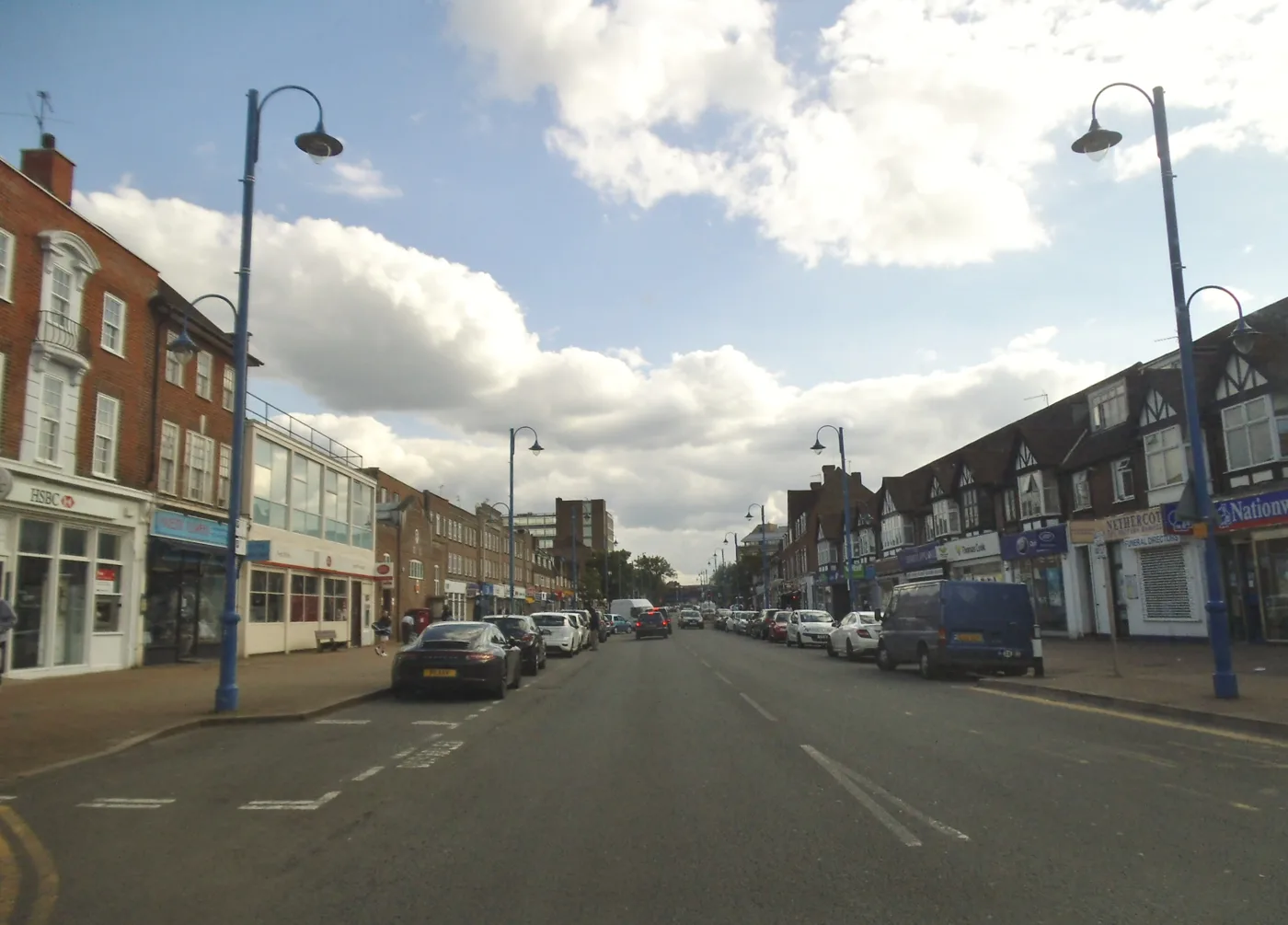

The consultation closed on Sunday. Hertsmere councillors decide on 16 September whether Potters Bar gets its own parish council, paid for by an uncapped precept.
Potters Bar is a step away from getting its own parish council for the first time. The second and final round of public consultation closed at midnight on Sunday 23 August. Hertsmere Borough Council will decide on 16 September 2026 whether to create it.
The council’s proposal is specific. Potters Bar would become a civil parish with a parish council of eleven councillors, one elected from each of eleven parish wards.
What is on the table
The draft proposals published for the second consultation cover two things:
- Warding. The parish would be split into eleven wards, using the borough council’s existing polling district boundaries as the template. That is deliberate: it means residents can vote in borough and parish elections at the same polling station on the same day.
- Councillor numbers. One councillor per ward, so eleven in total. The legal minimum for any parish council is five.
The council’s stated reason for eleven wards rather than fewer is cost. A by-election in a warded parish involves only the electors of that ward, so it is cheaper than one covering the whole town.
The eleven wards are nowhere near equal
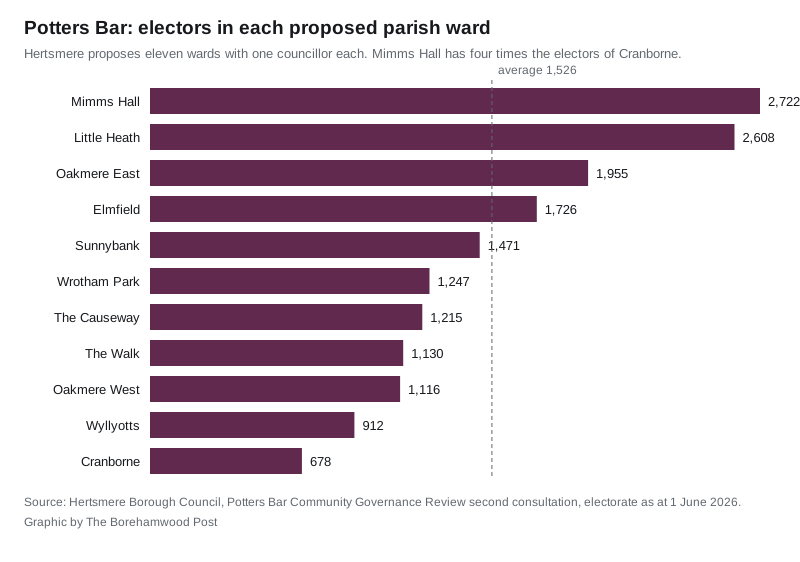
The eleven polling districts were drawn for borough elections, not for equal parish representation, and it shows. On the council’s own figures, as at 1 June 2026:
- Mimms Hall has 2,722 electors, the largest
- Cranborne has 678, the smallest
- The eleven districts hold 16,780 electors between them, an average of 1,526 each
Under the one-councillor-per-ward proposal, a Cranborne councillor would represent 678 people and a Mimms Hall councillor four times as many.
The council has been asked about this directly. Its published questions and answers record the query “the 11 council wards do not seem to have an equality of electorate, can we not stick to 8 councillors for 4 wards?” The answer is that if the consultation shows four wards and eight councillors is what people want, the council will follow that recommendation.
What it would cost
This is the part opponents raised most often, and the council has put real numbers on it.
A parish council has no central government funding. It is paid for by a precept, an extra amount added to the council tax bill of everyone in the parish. Hertsmere says the average parish precept in the borough is currently £104.17.
The borough’s four existing parish and town councils charged this in 2026/27, against 2025/26:
| Council | 2025/26 | 2026/27 | Change |
|---|---|---|---|
| Aldenham Parish Council | £142.62 | £156.33 | +£13.71 (9.61%) |
| Shenley Parish Council | £60.68 | £95.33 | +£34.65 (57.10%) |
| Elstree & Borehamwood Town Council | £72.66 | £85.06 | +£12.40 (17.07%) |
| South Mimms & Ridge Parish Council | £61.43 | £82.63 | +£21.20 (34.51%) |
Two points matter here. First, the range is wide: Aldenham charges nearly twice what South Mimms and Ridge does. Second, and this is the council’s own wording, a parish precept is not capped. Borough and county councils face a legal limit on how far they can raise council tax each year without a referendum. Parish councils do not. Shenley’s 57% rise in one year is what that looks like in practice.
If a Potters Bar parish council is created, Hertsmere would set its budget for the first financial year and collect it. After that the parish council would set its own precept annually.
What a parish council can and cannot do
The council’s guidance is blunt about the limits. A parish council can:
- Maintain allotments, closed burial grounds, play areas, village greens, community centres and public toilets
- Fund street lighting, bus shelters, litter and dog bins, and oversee street cleaning and open spaces
- Act as a statutory consultee on planning applications, so its views must be sought
- Fund local events, festivals, sports clubs and youth projects
It cannot fund education, social care, strategic highways, emergency services, housing or benefits. Those stay with the principal councils. On planning it can comment and be heard, but it does not decide applications.
How Potters Bar would compare
Potters Bar would immediately be the borough’s second largest parish. Hertsmere’s own comparison table, using the register as at 1 April 2026:
| Area | Electors | Properties | Councillors |
|---|---|---|---|
| Elstree & Borehamwood Town Council | 29,094 | 17,135 | 13 |
| Potters Bar (proposed) | 16,695 | 9,837 | 11 |
| Aldenham Parish Council | 7,672 | 4,304 | 12 |
| Shenley Parish Council | 3,284 | 1,781 | 9 |
| South Mimms & Ridge Parish Council | 853 | 539 | 5 |
On those numbers a Potters Bar councillor would represent about 1,518 electors. In Elstree and Borehamwood it is about 2,238, in Aldenham about 639, and in South Mimms and Ridge about 171.
One area is missing from that list. Bushey is unparished too, and it is bigger than Potters Bar, with 21,486 electors and 12,343 properties. It is not part of this review. Community governance reviews are triggered locally, and this one began with a petition from Potters Bar residents.
Little Heath is also excluded, though for a different reason: it sits inside Welwyn Hatfield’s boundary, so Hertsmere has no power to include it.
The reorganisation question
Several people who opposed the parish council said local government reorganisation might make it unnecessary. That is a fair question to raise now. Hertsmere Borough Council is being abolished on 1 April 2028 and replaced by South West Hertfordshire Council, a new unitary authority covering Hertsmere, Three Rivers and Watford, following the government’s decision on 16 July 2026.
The council’s answer is that reorganisation operates on the borough and county tier only, and does not statutorily affect parishes. A parish council created now would survive the abolition of the borough that created it.
Its own guidance then lists what it thinks could change, drawing on other areas that have been through unitarisation:
- Parishes may take on more responsibility to maintain local standards
- They may inherit local assets, which would push precepts up
- They could become the main voice of local identity within a much larger authority
- They would deal with one council rather than choosing between borough and county
What happens next
The published timetable for the rest of the review:
- 24 August to 1 September 2026: the Potters Bar Working Group, made up of Potters Bar borough councillors and officers, reviews the responses and drafts final recommendations
- 1 September 2026: the Constitution and Member Development Panel considers the draft and proposes final recommendations to Council
- 16 September 2026: full Council considers and decides
- Autumn 2026: if approved, the Community Governance Order is made
The first stage of the review ran from 21 April to 8 June 2026 and drew 604 responses, of which 72 per cent supported creating a parish council.
What it means for you
The consultation has closed, so there is nothing left to fill in. What remains is worth knowing:
- The decision is public. Full Council on 16 September is the meeting that settles it. Papers appear on the council’s committee site in the week before.
- If it goes ahead, you will pay for it. The parish precept is added to your council tax bill and is not subject to the referendum cap that limits borough and county rises.
- You could stand for it. Candidates must be 18 or over and meet one of four residency tests: registered to vote in the parish, living in or owning property there, working there, or living within three miles of it, each for the twelve months before nomination.
- Meetings would be open. A parish council must meet at least four times a year, including one public meeting, and is bound by the same transparency rules and code of conduct as any other council.
Planning decisions across the borough, which a parish council would get a formal say on, are tracked on our planning news page. We also reported the borough’s Article 4 direction on Potters Bar HMOs, which comes into force in May 2027.
Sources
- Hertsmere Borough Council, Potters Bar Community Governance Review 2026, checked 24 August 2026, for the draft proposals, the eleven polling districts and their electorates, the consultation dates, the review timetable, the average precept and the existing parish councils.
- Hertsmere Borough Council, Potters Bar Community Governance Review Questions and Answers (PDF) for the precept table, the electorate and property comparison, the uncapped-precept point, the reorganisation answers, the Little Heath exclusion and the candidacy rules.
- Hertsmere Borough Council, First Consultation Response Summary (PDF) for the 604 responses, the 72 per cent figure and the reasons given on both sides.
- Hertsmere Borough Council, news release of 2 July 2026 for the consultation launch and the public sessions.
- Hertsmere Borough Council, Government announces four unitary authorities in Hertfordshire, 16 July 2026, for South West Hertfordshire Council and the 1 April 2028 date.
Have your say